
Indianapolis Genealogy Records
Indianapolis genealogy records are split across several offices in Marion County, making the city one of the richest places in Indiana to trace family roots. The Marion County Clerk's Office holds court-generated records going back to 1822, while the county health department maintains birth and death certificates from 1882 onward. Whether you are searching for a great-grandparent's marriage license or a decades-old probate file, Indianapolis offers both in-person access and growing online resources to help you move your research forward.
Indianapolis Quick Facts
Marion County Clerk Records
The Marion County Clerk's Office sits at 200 E. Washington Street, Room W122, Indianapolis, IN 46204. The phone number is 317-327-4740, and the office is open Monday through Friday from 8:00 a.m. to 4:30 p.m. The Clerk is established by the Indiana Constitution to serve as record keeper for the Circuit Court. Staff can help you locate records but cannot assist with in-depth genealogy research, so come prepared with names and approximate dates.
The Clerk holds an impressive range of historical documents. Marriage records span from 1822 to 1925 in index form, with licenses available from 1822 through 1990. Divorce records run from 1865 to 1990. The naturalization index covers 1822 to 1928. Wills and estate files go back to 1822. These are all court-generated records, meaning they were created when someone filed a legal action. That makes them especially reliable for genealogy because the information had to be sworn or attested.
A separate Microfilm Library and Records Department is located at 1330 Madison Avenue, phone 317-327-4715. This location holds many of the older film reels and can be a good stop if the main office refers you elsewhere. Call ahead to confirm hours before making the trip.
The Marion County Clerk's Office maintains public records spanning nearly two centuries of Indianapolis legal history, including one of the largest county-level genealogy collections in Indiana.
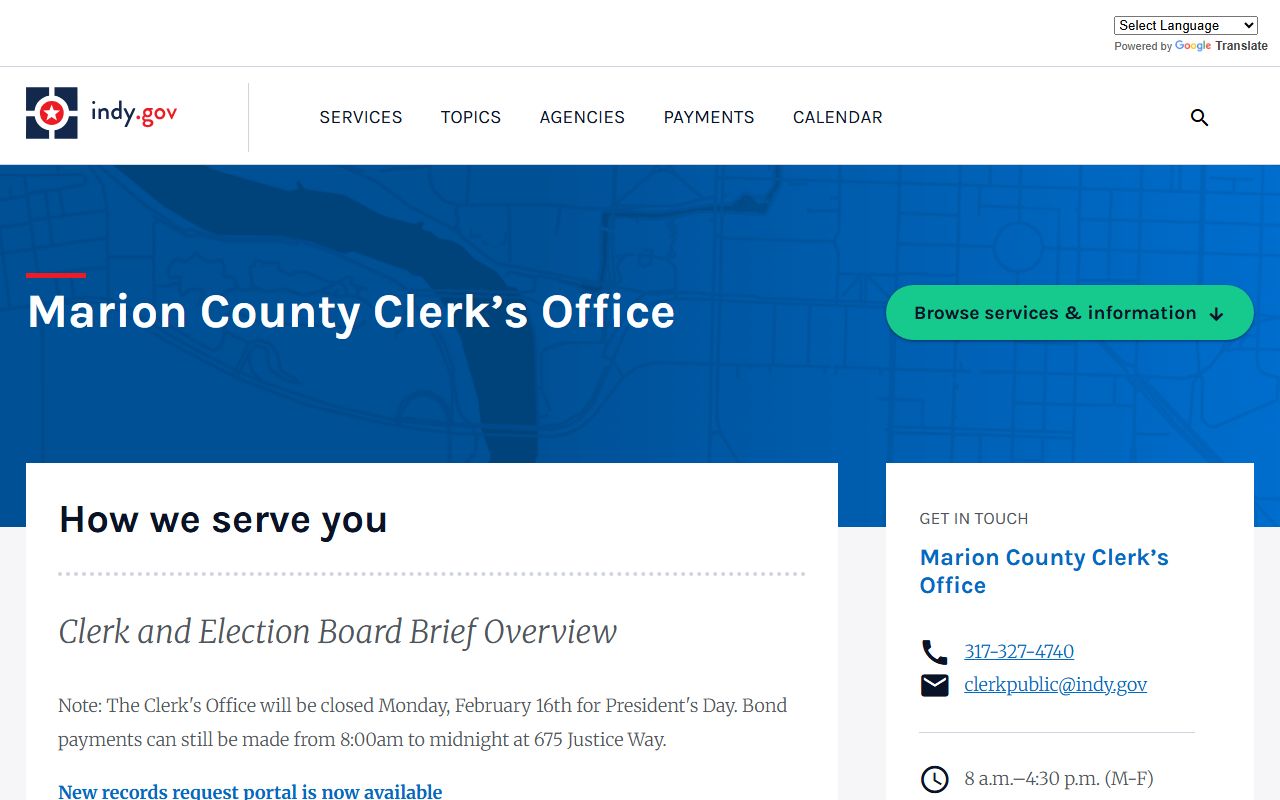
The main office at 200 E. Washington Street is the starting point for anyone researching marriages, divorces, probate, and court records tied to Indianapolis families from the 1800s onward.
Indianapolis Birth and Death Records
Vital records for Indianapolis residents are held by the Marion County Public Health Department, located at 3838 N. Rural Street, Indianapolis, IN 46205. The phone number is 317-221-2400. Birth and death certificates both begin in 1882. The fee for a certified birth certificate is $10, and a certified death certificate costs $8. Additional copies ordered at the same time run $4 each.
Indiana's 75-year rule under IC 5-14-3-4 means some records are restricted if the person could still be living. For genealogy purposes, you generally need to show that the person was born more than 75 years ago or that they are deceased. The health department can walk you through what documentation they need to release older records. If you are researching someone who died recently, you may need to prove your relationship before receiving a certified copy.
VitalChek offers online ordering for Marion County vital records through vitalchek.com. This is useful if you live outside Indianapolis or cannot visit in person. Processing times vary, so check the site for current estimates.
The Marion County Public Health Department handles vital records requests for birth and death certificates recorded in Indianapolis going back to 1882.
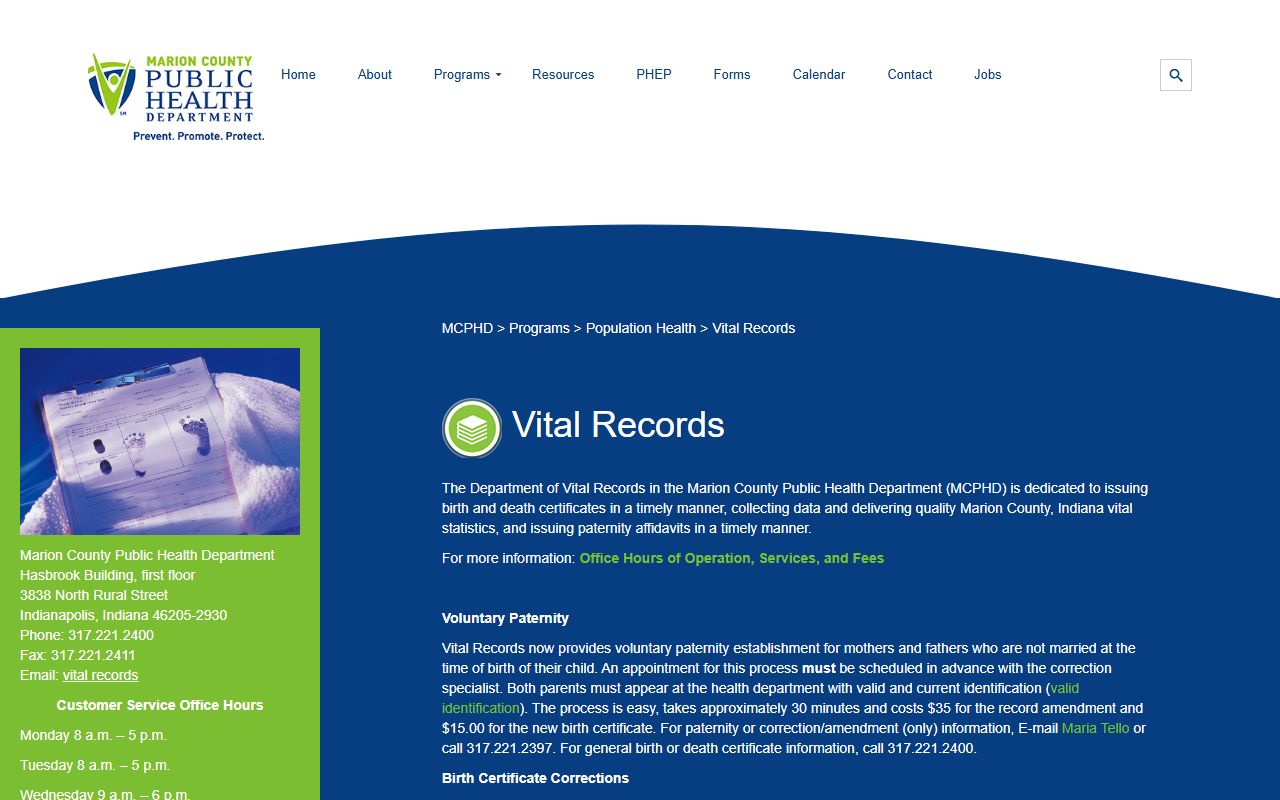
Fees and required ID types are listed on the department's vital records page, and staff can explain what documentation is needed for older genealogy requests.
Indianapolis Public Library Genealogy Resources
The Indianapolis Public Library system is a strong free resource for family history research. The Central Library branch holds local history and genealogy materials including city directories, newspapers, and microfilm collections that can help you place ancestors in time and place. City directories are especially useful for the late 1800s and early 1900s, when vital records were not always formally registered.
Library staff at the Indiana collection can help you navigate the holdings and suggest sources you may not have considered. The library also provides access to several subscription databases at no charge when you visit in person, including Ancestry and other genealogy platforms. This is a practical option if you want to search without paying for a subscription.
The Indianapolis Public Library gives researchers access to historical newspapers, city directories, and genealogy databases that complement official records from county offices.

The Central Library's Indiana collection includes materials not available through government offices, making it a key stop for anyone researching Indianapolis families from the 19th century.
Note: The Indiana State Library at 315 W. Ohio Street, phone 317-232-3689, holds a dedicated Genealogy Division with statewide resources, newspapers, and county histories that can supplement what you find at the public library.
Indiana Archives and State-Level Records
The Indiana Archives and Records Administration (IARA) operates a research facility at 6440 E. 30th Street in Indianapolis, phone 317-591-5220. The online research portal is at researchIndiana.iara.in.gov. IARA holds state government records that did not remain at the county level, including some older court records, agency files, and historical documents transferred from other offices.
For Indianapolis researchers, IARA is most useful when county records appear incomplete or when you are looking for records created by state agencies rather than Marion County offices. Military discharge records, some immigration files, and older state institution records may be found here. The research room staff can guide you through what is available and how to request copies.
The Indiana Historical Society at 450 W. Ohio Street, phone 317-232-1882, maintains a research library at indianahistory.org. The Society holds manuscript collections, photographs, maps, and other materials donated by families and institutions over the years. These collections can fill gaps that official records leave open, particularly for everyday life details and family correspondence.
FamilySearch has a detailed Indiana genealogy wiki at familysearch.org that lists what records exist for each county and where to find them. Much of the content is free to access. The Indiana Genealogical Society at indgensoc.org also publishes research guides and connects researchers with others working on the same family lines.
How to Request Indianapolis Records
Most people start with vital records if they are looking for birth, death, or marriage information. Contact the Marion County Public Health Department for certificates from 1882 forward. For marriages after 1990 or divorces after 1990, contact the Marion County Clerk's Office directly. The Clerk's main number is 317-327-4740.
Mail requests are accepted by both offices. Include a copy of your photo ID, the name of the person you are researching, the approximate date or date range, and your payment. Money orders are the safest form of payment for mail-in requests. Write clearly and include a return address. Processing times for mail requests can be several weeks.
In-person visits are often faster. The Clerk's Office and the health department both accept walk-in requests during business hours. Bring your ID and any supporting documents that show your relationship to the person on the record, especially for records that may fall under access restrictions.
Note: Indiana law under IC 16-37 governs vital records registration statewide. Certified copies carry legal weight; uncertified or informational copies are fine for personal genealogy use but cannot be used for legal purposes such as passports or estate matters.
Nearby Cities with Genealogy Pages
Other Indiana cities near Indianapolis also have genealogy record pages with local office details and research tips.
Marion County records are maintained separately from the surrounding counties. If your ancestor lived in a neighboring county, see the Marion County genealogy page for broader county-level resources and links to adjacent county pages.