
Access Scott County Genealogy Records
Scott County genealogy records are kept at the county health department and the clerk's office in Scottsburg, Indiana. Birth and death records go back to 1882, and marriage records at the clerk's office trace family history to the county's earliest years. If you are researching ancestors in Scott County, this guide covers where records are held, how to request them, and what state-level resources can help supplement your local search.
Scott County Quick Facts
Scott County Health Department and Vital Records
The Scott County Health Department in Scottsburg maintains birth and death records for events that took place in Scott County starting in 1882. Indiana did not begin statewide birth registration until 1907 and death registration until 1900. That means the county health department holds records for a span of time that the state office simply does not have. For Scott County genealogy research, the county office is the primary source for those early years.
Genealogy researchers must typically show that the person named on a requested record is deceased and over 75 years old. This requirement applies both at the county level and through the state office. The rule exists under Indiana law to balance public access with privacy protection for living individuals and those who died recently. If you are tracing an ancestor who died in the mid-1900s or earlier, this requirement is usually easy to meet.
The Scott County Health Department handles certified copies of birth and death records, paternity affidavits, and genealogy hard copies. Walk-in service availability varies, so it is worth calling ahead before you drive to Scottsburg. Scott County's local office can tell you current fees, processing times, and whether an appointment is required for genealogy requests.
Note: The statewide fee schedule sets birth certificate costs at $10 for the first copy and $4 for additional copies from the same order. Scott County may set its own local fees, so confirm with the county office before submitting payment.
Scott County Clerk and Marriage Records
Marriage records in Scott County are held at the county clerk's office in the Scottsburg courthouse. Indiana's statewide marriage index starts in 1958. Anything before that year requires a request to the county clerk where the license was issued. Scott County has marriage records going back to the early 1800s, which makes the clerk's office a key stop for any family history research involving ancestors who married in southern Indiana.
Probate records at the clerk's office are also important for Scott County genealogy. When a person died with property, a probate case was filed. These cases name heirs, list assets, and document family relationships in ways that birth and death certificates alone do not capture. Probate files can tell you who the children of a deceased person were, who the administrator was, and when the estate was settled.
Land records at the recorder's office in Scottsburg can extend your research further back than vital records allow. Property deeds survive in many Indiana counties from the early 1800s. They record who sold land, who bought it, and in some cases show that family members were the parties to a transaction. That kind of documentation can help you establish family ties when official vital records do not yet exist for that period.
Under Indiana Code 5-14-3, records held by public agencies are generally open for inspection. Exceptions exist for records that involve privacy, but older genealogy documents in Scott County are typically available once the applicable time limits have passed.
State Genealogy Resources for Scott County
The Indiana Department of Health Vital Records Division at 2 N. Meridian St., Indianapolis holds statewide records that include Scott County events from 1907 forward for births and 1900 for deaths. The state office accepts requests by mail, phone, and online. Their main number is (317) 233-2700. The toll-free line at (866) 601-0891 is available 24 hours a day. Online ordering goes through VitalChek with credit card payment. Mail requests use Form 49607 for births and Form 49606 for deaths.
The Indiana State Library at 315 W Ohio St, Indianapolis is a major resource for Scott County family history. Their genealogy collection includes more than 40,000 print items, including family histories, indexes, cemetery transcriptions, and military pension records. The library phone is 317-232-3689. Their Indiana County Research Guides include a Scott County-specific guide that lists available records and where to find them.
The state library screenshot below shows the genealogy division portal where Scott County-specific research guides are available:
The Indiana State Library Genealogy Division provides research guides tailored to each Indiana county, including Scott County, and holds one of the Midwest's largest family history collections.
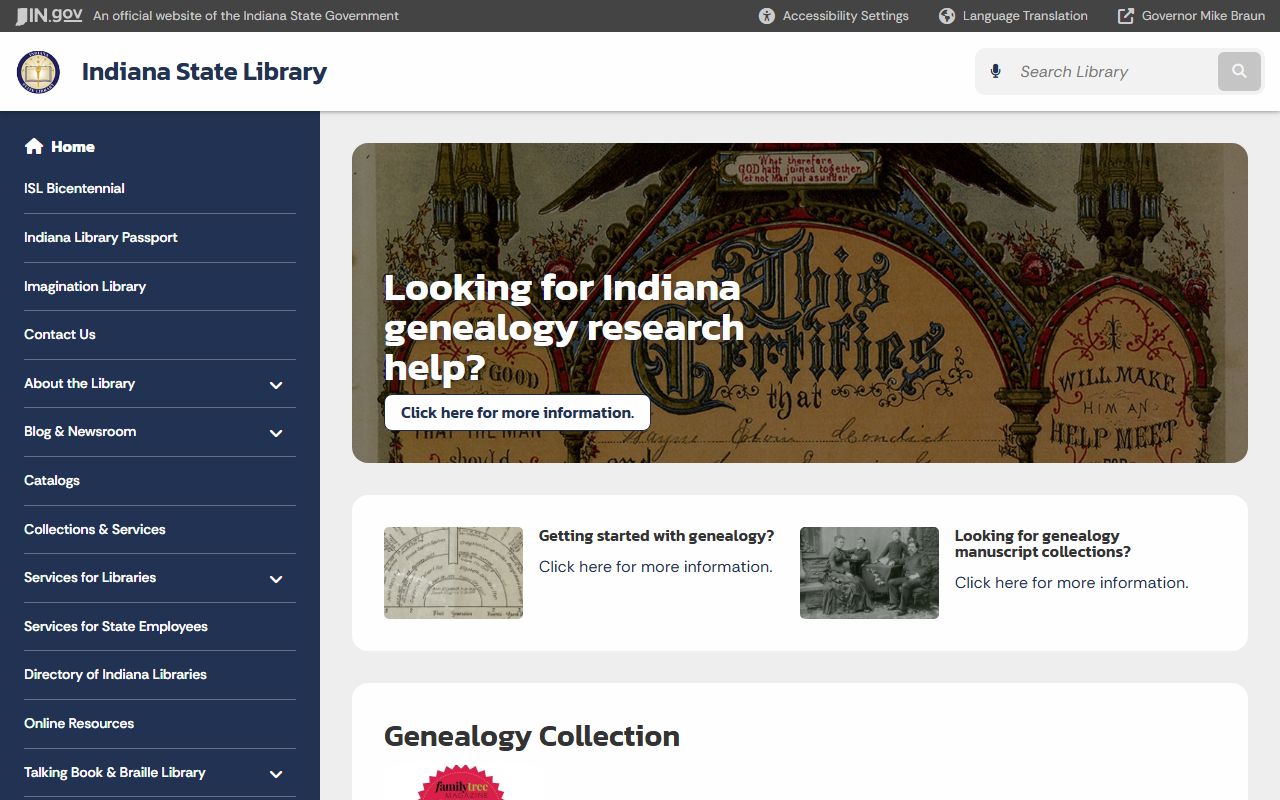
The library's DAR volunteers assist researchers on Wednesday afternoons and the second Saturday of each month, providing help with lineage searches that include Scott County ancestry.
Indiana Archives and Scott County Historical Records
The Indiana Archives and Records Administration at 6440 E 30th St, Indianapolis holds older Scott County court and state records that have been transferred for permanent preservation. IARA's phone is (317) 591-5220. When Scott County offices transfer records at the end of their local retention periods, IARA is where those records go. Their online catalog at researchIndiana.iara.in.gov allows searches without an in-person visit to Indianapolis.
Under IC 5-14-3-4, confidential records generally become open 75 years after their creation. This timeline means that many Scott County records from before 1951 are now available to researchers. Records from the early 1900s and before are almost always open, which is good news for genealogists looking at several generations back.
The Indiana Historical Society holds manuscripts, photographs, and local history materials for Scott County and surrounding southern Indiana communities. They can be reached at (317) 232-1882. Their cross-referencing of county-level documents with broader Indiana history can fill in context that official records miss. The Indiana Genealogical Society offers county pages and genealogy resources specific to Scott County, and FamilySearch's Indiana Genealogy wiki points to free online transcriptions and indexes.
The Indiana Archives portal below shows the statewide system used to access transferred Scott County and other Indiana records:
Visit the Indiana Archives and Records Administration to search for transferred Scott County records including older court cases and naturalization papers.
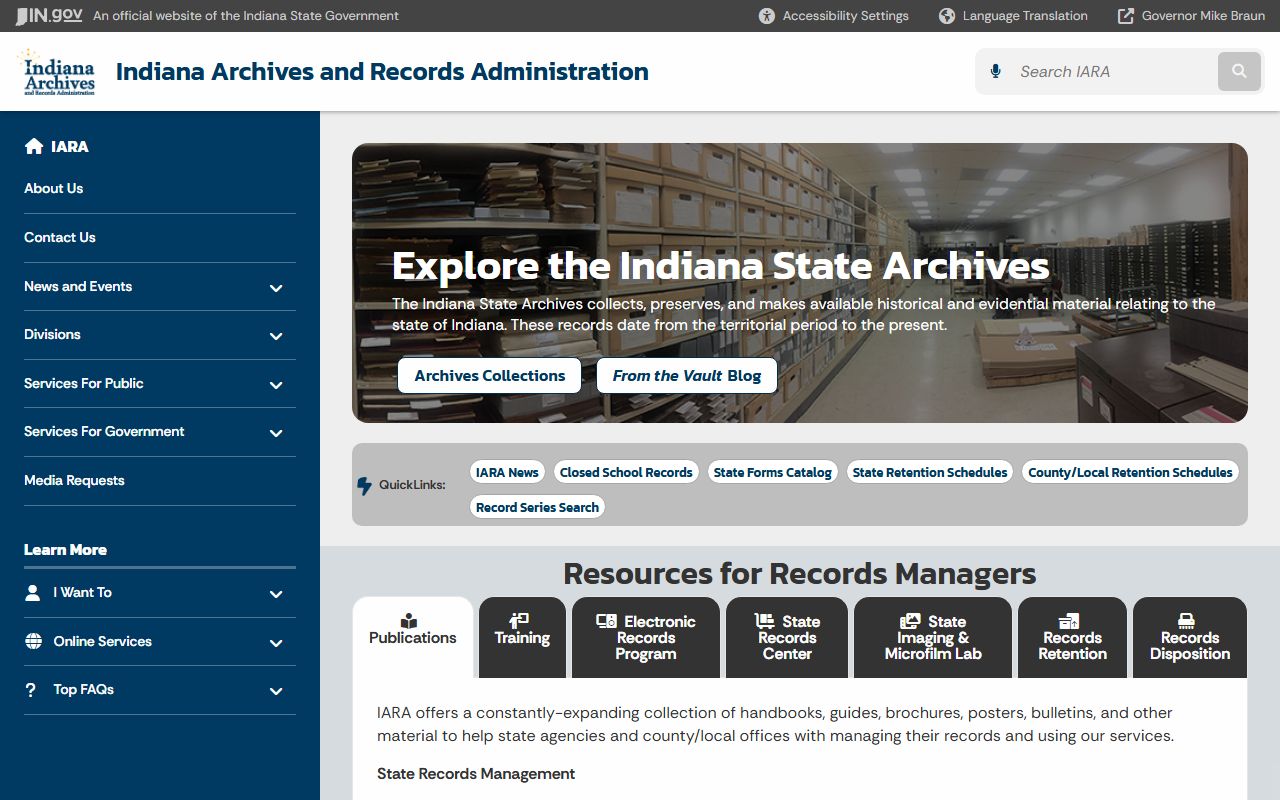
IARA preserves records from all Indiana counties under standards designed for long-term access, making older Scott County documents available to modern researchers.
VitalChek and Remote Ordering for Scott County Records
Researchers who cannot visit Scottsburg in person can order Indiana vital records through VitalChek online, or by calling (866) 601-0891. These methods work for records held at the state level, which covers Scott County births from 1907 and deaths from 1900. For records between 1882 and those state start dates, a request to the Scott County Health Department is necessary. Mail orders go to 2 N. Meridian St., Indianapolis, IN 46204 using the appropriate form.
The local health department map at in.gov lists Scott County's health department contact information with current hours and phone numbers. This is the fastest way to confirm what the county office currently offers before planning your research trip to Scottsburg or mailing a request.
Cities in Scott County
Scott County's communities include Scottsburg, Austin, and Lexington. None of these cities meets the 25,000 population threshold for a dedicated city genealogy page. All vital records and court filings for Scott County towns are managed at the county level in Scottsburg.
Nearby Counties
Scott County borders several Indiana counties in the south-central region of the state. If your research points to ancestors near a county line, records may be held in a neighboring office. Check these nearby county pages for additional resources.